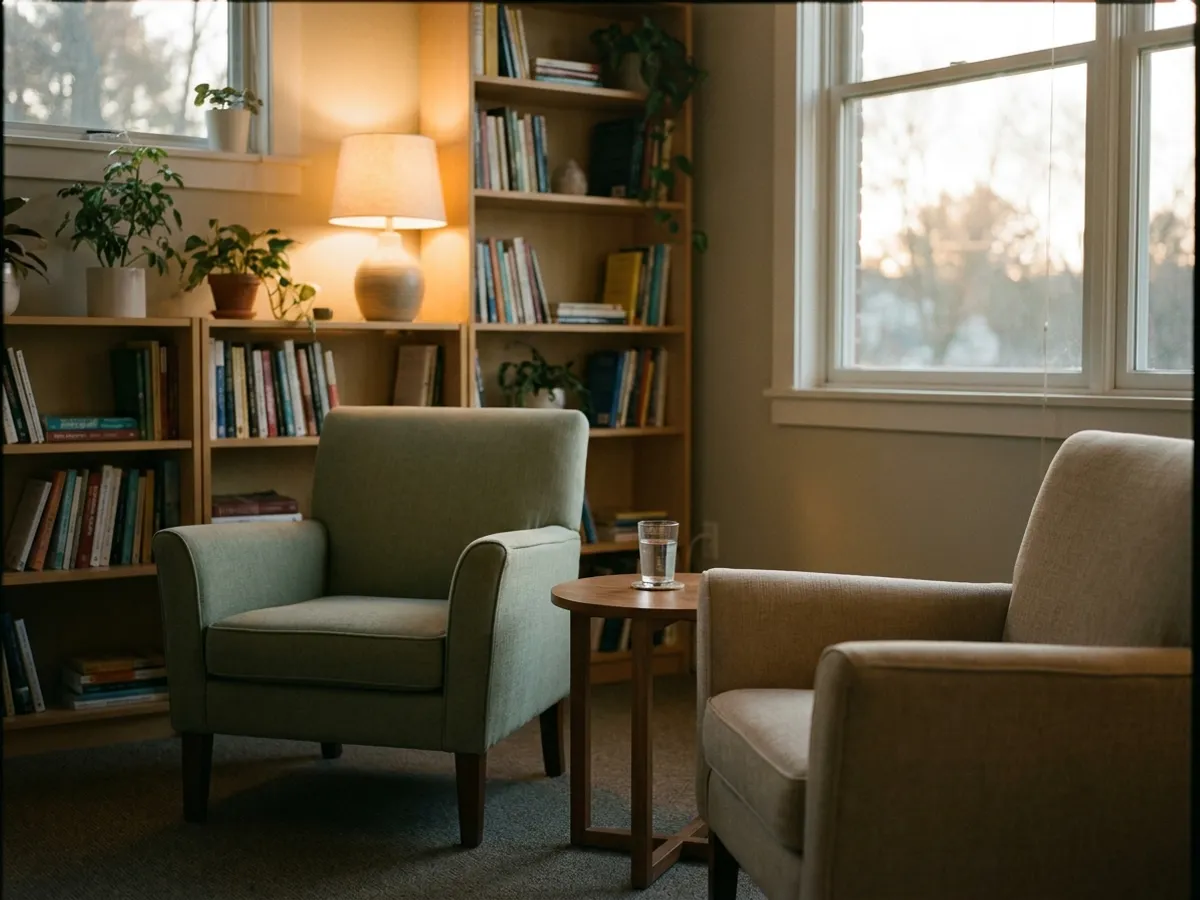
Couples counseling in Tampa Bay means sitting down with a counselor, usually for fifty minutes to an hour, with both of you in the room. Most couples come weekly at first.
A marriage counseling practice serving the Tampa Bay area. We are not licensed mental health providers, and what we offer is not psychotherapy, a diagnosis, or medical care.
Ask what it costsWe'll tell you on the call, before you book anything.
We are a marriage counseling practice, and we work with couples from Tampa, St. Petersburg, Clearwater, Brandon, and Wesley Chapel. What we charge, and who you would be sitting with, are not published here yet. Where a detail is not settled, this page says so instead of guessing.
What it costs
Price is the question most people ask first, and most practice websites will not answer it. Ours is not settled yet, and rather than quote somebody else’s number in the meantime, this page says so.
Three things usually move what couples counseling costs: how long a session runs, what training the counselor has, and whether you are seen in person or over video. Ask any practice you call to put its figure in writing before you book.
Marriage counseling is normally a course of sessions rather than one appointment, so the number worth asking about is what the whole course is likely to come to, not just the first hour.
Insurance usually does not cover couples counseling anywhere. Insurers pay for the treatment of a diagnosed condition, and relationship distress on its own is not one.
Awaiting sign-off: what we charge for a session
Our price goes here before the site goes live. It is not published yet, and no other practice’s figure stands in for it in the meantime.
Who you would be working with
Who you would be sitting with is not published on this page yet. It goes here once the practice has confirmed it, and not before.
Awaiting sign-off: the counselor list
No counselor is listed here yet
Who you would be working with is not published here yet. It goes up once the practice has confirmed it, and not before.
What the first session is like
The first few minutes are a little awkward for almost everyone. You sit down, someone picks the wrong chair, and the counselor has seen it a thousand times.
After that it is mostly questions. How did you two meet, what is happening now, what would be different if this worked. Many counselors also spend some time with each of you separately early on, partly because people say different things when their partner is not answering for them.
You are not expected to arrive with a position, or to have agreed on what the problem is. Disagreeing about that is often the reason people come.
1Before. You each answer a short intake form. Fifteen minutes, done separately.
2In the room. Fifty minutes to an hour, both of you, mostly the counselor asking how you got here.
3After. Most counselors suggest weekly for the first stretch, then space it out. Most bill session by session.
Read before you call
Three questions come up before anything else, and none of them needs a phone call to answer. Each of these is written the way we would answer it on the phone, with sources where there is research and a plain "we do not know" where there is not.
Couples who have agreed to go and want someone nearby who can see them this month. That is the simplest case, and a phone call settles it.
One partner, researching alone, who has not raised it yet. If you have been reading about this for three weeks without saying anything, you are in very good company. It is one of the most common ways people end up on a site like this.
Couples who are not married. Dating, living together, co-parenting, engaged. "Marriage counseling" is the phrase most people search, but it quietly excludes a lot of people, and this site does not work that way.
Couples who want a counselor who shares or respects their faith, and couples who would rather that never came up. Both are ordinary requests, and both are answerable before you book.
Couples counseling assumes both people can speak freely in the room and go home safely afterward. Where that is not true, it is the wrong place to start, and a counselor who works with couples should screen for it before agreeing to see you together.
Evenings, weekends, and video
Getting two working people into the same room at the same time is the practical problem, and it is the reason a lot of couples never start. Ask about times on the first call rather than after you have booked.
Video solves the version of this where the drive is the obstacle, and the version where you would rather not be seen walking into an office twenty minutes from your house. Parking near Kennedy Boulevard at five thirty is its own small test of a relationship.
Awaiting sign-off: our appointment times and whether we see couples by video
Which evenings and weekends we hold, and whether we offer video sessions, are not settled here yet. They will be stated on this page before the site goes live.
Across the bay
We work with couples from across the metro, so where you live matters less than it used to. It still matters at six in the evening on the Howard Frankland.
St. Petersburg has its own page, covering what getting to a session from there actually involves. The others are listed because we see couples from them, not because there is a page to read yet.
Published outcome research generally reports that most couples who complete a course of couples therapy are better off afterward than couples who do not. It is not a guarantee, results vary by couple and by counselor, and the research is clearer about short-term improvement than about where couples land years later.
What if my partner will not go?
Common, and not the end of it. Some people start individually with a counselor who also works with couples, which often makes the joint conversation easier later. Some counselors will talk this through on the phone before anyone books.
How long does it take?
Most couples are seen weekly at first. Counselors commonly describe a first stretch of eight to twelve sessions before deciding whether to continue, space it out, or stop. Ask how a counselor makes that call.
Do we have to be married?
No. Dating, living together, engaged, co-parenting, or married, the work is the same for any couple.
Is this a counseling practice or a directory?
A practice. This is our own website rather than a directory, so nobody is being handed on to a third party. We hold no state mental-health license, and a session here is not psychotherapy, a diagnosis, or medical care.
How is this site paid for?
The site and the practice are one business, so there is nothing to disclose about who is paying whom. Nobody buys a place on it, and no commission rides on your call. The about page says more.